The World Cup Is a Relevance Test
for Sportsbook and Casino Operators
The FIFA World Cup 2026 will not suffer from a lack of attention. It will dominate media coverage, social conversation, public spaces, sponsorship inventory, and operator planning across markets. For sportsbook and casino operators alike, that creates a powerful commercial opportunity.
It also creates a trap.
When an event is this big, it is easy to assume that demand will do the heavy lifting. Increase campaign volume. Push more offers. Talk to more players. Stay visible. Keep sending.
But that is not where operators win.
The World Cup is not just an acquisition moment. It is a relevance test.
The demand is already there. The real question is how well operators use it.
Every operator gets access to the same tournament. The same fixtures. The same players. The same media hype. The same rise in casual and event-led interest.
What separates one operator from another is not whether the event is big enough. It is whether the operator turns that attention into the right next action.
Weak execution tends to look familiar:
broad campaigns sent too widely, too early, or too often
the same message shown to sportsbook-first and casino-first audiences
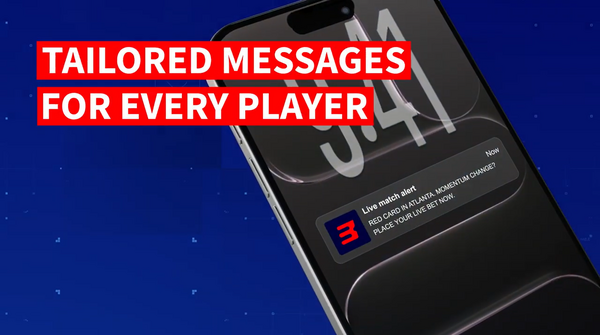
generic promotions sent instead of more relevant market, match, or journey prompts
too much emphasis on campaign volume, too little on timing and fit
too little differentiation between high-intent, casual, dormant, and event-led users
The World Cup amplifies all of those weaknesses because the audience gets broader at exactly the moment the competition gets louder.
That is why more communication is not the same thing as better execution.
Generic communication is often treated as harmless. At worst, it gets ignored.
In reality, it does more damage than that.
When players receive broad, irrelevant communication, they do not just skip it. They draw conclusions from it:
this brand does not know me
this message is meant for everyone
this operator is pushing volume, not value
That weakens more than response rates. It weakens trust in future communication. It trains players to filter you out.
Around the World Cup, that cost rises. The tournament is one of the few moments when casual users, dormant users, sportsbook-first bettors, and even casino-led audiences may all move closer to action at once. If operators waste those moments on broad execution, they are not just losing a click. They are losing one of the most commercially valuable windows of the cycle.
One of the biggest mistakes operators make around major tournaments is over-focusing on their top-value segments.
VIPs matter. High-frequency bettors matter. But the World Cup expands the value pool far beyond those audiences.
Low-LTV, casual, and event-led users may not justify high-touch CRM one by one. In aggregate, they can define tournament performance.
That changes the operating model.
The question is no longer: who should get our most aggressive treatment?
It becomes: who should get what level of treatment, at what moment, and through which experience?
That is the real commercial role of personalization around an event like this.
Not every customer deserves the same effort. But every customer benefits from the right level of relevance.
The operators who get more value from the World Cup usually do five things better.
The event itself is already driving awareness. The stronger commercial move is to convert that attention more precisely.
Casual users, dormant users, habitual bettors, and casino-first audiences do not move for the same reasons. They should not receive the same journeys.
The goal is not to dominate every interaction. It is to win the moment when intent starts to crystallize.
Not everyone should be contacted. Not everyone should receive a bonus. Relevance also means suppression.
Before the tournament, during the tournament, and after the tournament require different decisions. Operators who treat the World Cup as one short acquisition spike usually leave value behind.
For sportsbook operators, the relevance problem is obvious. The World Cup creates a surge in attention, but that attention only becomes value if the right players find the right markets, stories, and moments.
For casino operators, the event still matters — especially those with mixed sportsbook and casino propositions. The World Cup broadens the addressable audience, creates new crossover opportunities, and gives sports a cultural relevance that many casino-first users would not normally act on.
That does not mean forcing sports into every casino journey or casino into every sports journey.
It means identifying adjacent interest, lowering friction, and making the next step feel natural.
The operators who do that well are not just louder. They are more relevant.
VAIX helps sportsbook and casino operators turn the World Cup from a volume event into a relevance event by improving the quality of commercial decisions around:
which players are showing rising intent
which users are worth reactivating
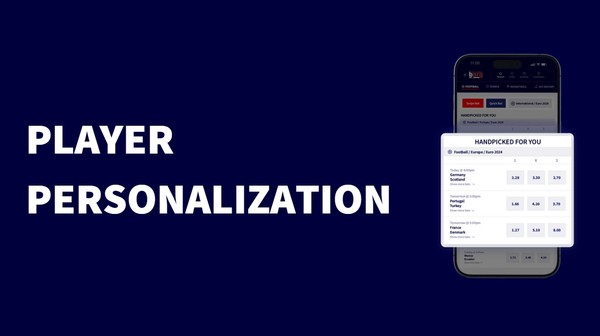
which match, market, content, or offer is most relevant next
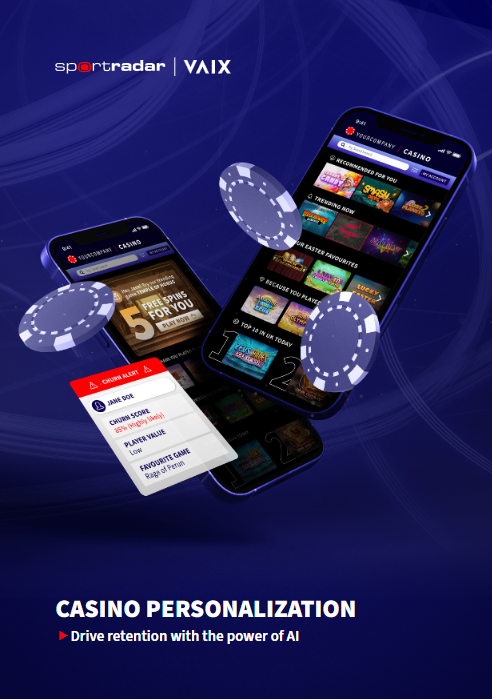
which players are at risk of churn
which audiences deserve less pressure, not more
which adjacent journeys feel natural, and which feel forced
That is what changes the economics of tournament marketing.
Not more AI in the abstract.
Not more CRM in the abstract.
Not more promotion in the abstract.
Better matching between player, moment, and experience.
Sportsbook and casino operators do not need to manufacture World Cup demand. The demand is already coming.
The challenge is making sure that demand does not get wasted in broad execution, undifferentiated journeys, and communication that feels more like pressure than service.
That is why the World Cup is a relevance test.
And the operators who pass that test are often the ones who carry more value out of the tournament than the ones who simply generated the most noise.
If retention, relevance, and player value are on your agenda, we’d be glad to talk.